

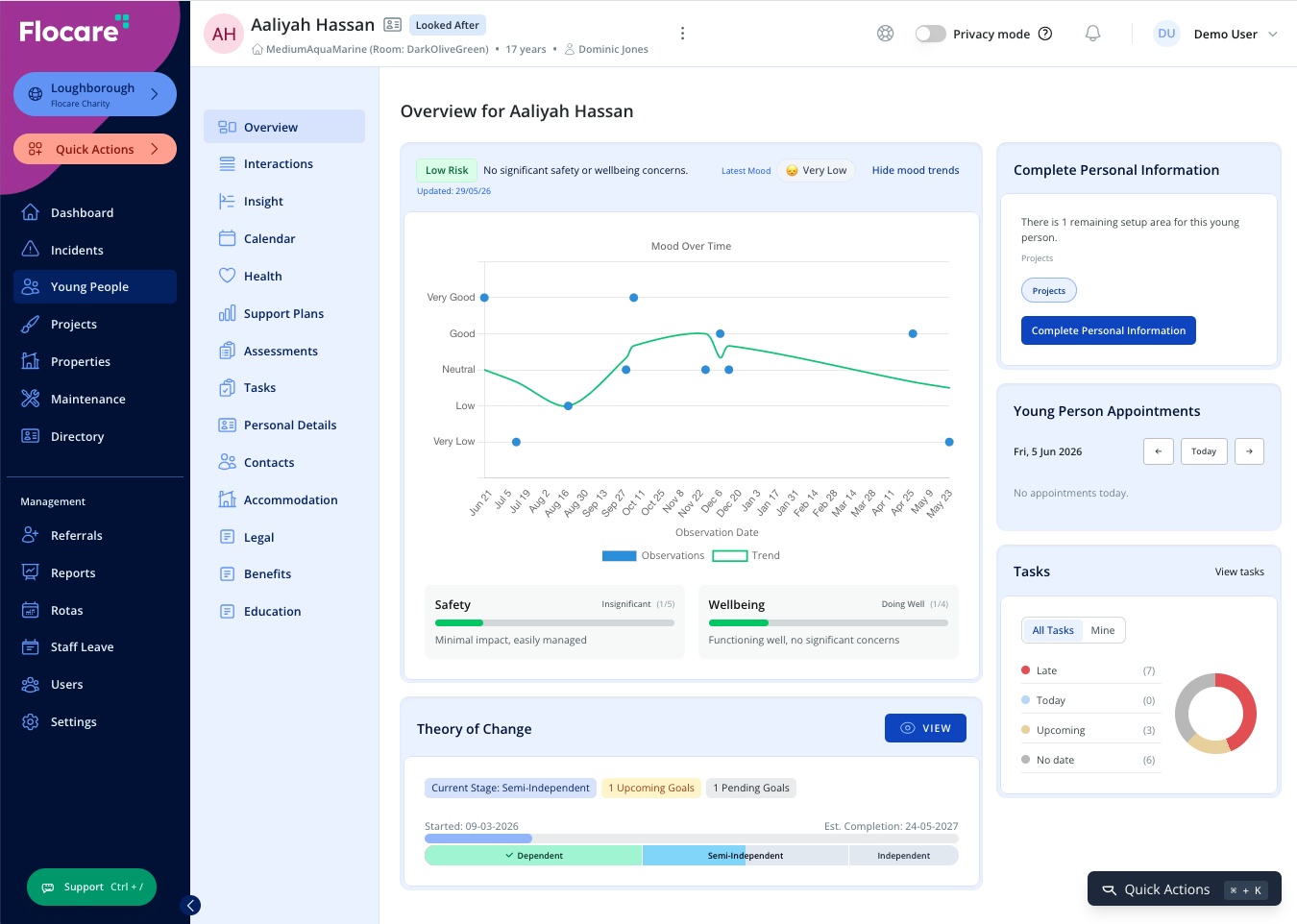
Supported living charities and not-for-profit organisations face unique challenges when tracking client progress. Traditional approaches often rely on paper notes, spreadsheets or disconnected systems, which can make reporting harder and increase the risk of missing important context.
Digital platforms give teams a more reliable way to capture, understand and evidence progress.
The challenges of traditional progress tracking
Manual progress tracking can create several operational issues:
- Staff spend time entering the same information in multiple places.
- Paper files can be misplaced, incomplete or difficult to search.
- Teams lose visibility when information sits in silos.
- Managers struggle to identify trends across services.
These problems do not just affect admin time. They can also make it harder to provide timely and personalised support.
Benefits of digital progress tracking
A digital platform designed for supported living can improve progress tracking in several ways.
Real-time records
Staff can record observations, actions and updates as work happens. This gives everyone involved in a client’s support access to more current information.
Improved accuracy
Structured fields, reminders and templates reduce avoidable errors and make records easier to review.
Centralised information
A single platform gives teams a shared source of truth for client notes, support plans, incidents, appointments and outcomes.
Better reporting
Built-in reporting makes it easier to evidence progress, prepare reviews and understand where additional support may be needed.
Security and compliance
Modern platforms are built with data protection, access control and auditability in mind, helping organisations protect sensitive information.
Choosing the right platform
When reviewing digital tools, consider ease of use, flexibility, security, reporting, scalability and the support available during rollout. The best platform is one your team can confidently use as part of everyday care delivery.
Conclusion
Digital progress tracking helps supported living teams replace fragmented records with clearer, more consistent information. That gives staff more time to focus on support and gives leaders better insight into outcomes.