

Support workers record an incredible amount of valuable information.
Every day they document appointments, conversations, observations, achievements, concerns and interactions that provide a detailed picture of the people they support.
Yet despite the effort that goes into recording this information, many organisations struggle to use it effectively.
Support notes are often written, stored and rarely looked at again unless a specific incident needs reviewing.
As a result, organisations miss an opportunity to understand and demonstrate the impact of the support they provide.
This post is the fourth in our series, Measuring What Matters: A Practical Guide to Outcomes in Supported Living. You may also want to read What Do We Mean by "Outcomes" in Supported Living?, How to Measure Outcomes in Supported Living Without Creating More Admin, and 5 Outcome Areas Every Supported Living Organisation Should Be Tracking.
The reality is that support notes often contain some of the strongest evidence of progress available.
The challenge isn't collecting more information.
It's turning existing information into meaningful insight.
The hidden value of support notes
Most organisations already possess a wealth of outcome evidence.
It's simply buried within daily records.
Consider the following support note:
Client attended GP appointment independently after previously requiring staff support. Appeared confident and communicated effectively throughout.
At first glance, this may appear to be a routine case note.
In reality, it provides evidence of:
- Increased confidence
- Improved independence
- Progress towards personal goals
- Reduced reliance on support
Multiply this type of observation across weeks and months, and a clear picture of progress begins to emerge.
The challenge is recognising these moments for what they are.
Not simply records of activity.
Evidence of change.
Why organisations often miss the bigger picture
Support notes are typically reviewed in isolation.
Staff focus on individual entries rather than considering the wider story they tell.
This is understandable.
Day-to-day operational demands often leave little time for deeper analysis.
However, outcomes rarely become visible through a single note.
Meaningful progress is usually revealed through patterns.
For example, one support note may record a successful appointment.
Several months of support notes may reveal a gradual increase in independence across multiple areas of life.
The real value lies in identifying those trends.
Looking beyond activities
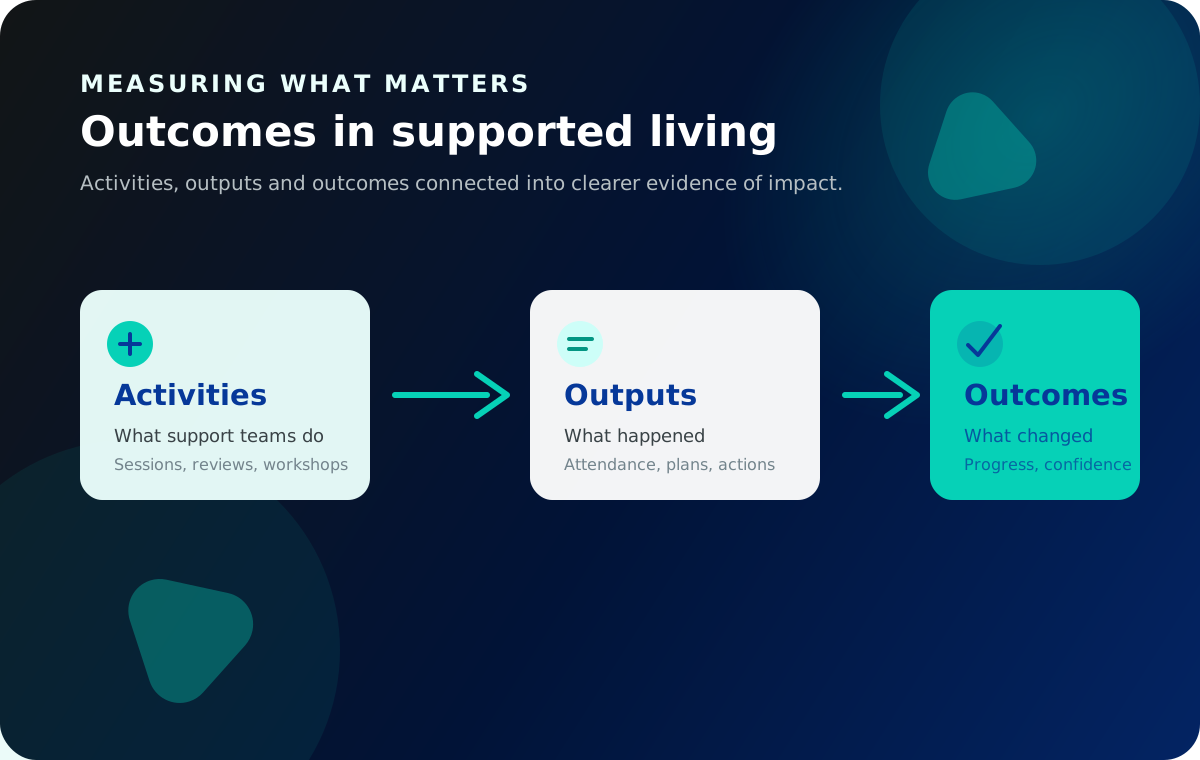
One of the most useful exercises organisations can undertake is learning to separate activities from outcomes.
Consider the following examples.
Activity
Support worker attended budgeting session with client.
Outcome evidence
Client successfully created and followed a weekly budget without support.
Activity
Support worker accompanied client to a community group.
Outcome evidence
Client now attends independently and has developed new social connections.
Activity
Support worker completed wellbeing check.
Outcome evidence
Client reports increased confidence and improved emotional resilience over time.
The activity is important.
But the outcome tells us what changed.
And that's what stakeholders increasingly want to understand.
Identifying outcome indicators in everyday notes
Support notes often contain outcome indicators without explicitly describing them as such.
Common examples include:
Independence
- Managing appointments independently
- Completing household tasks
- Managing finances
- Travelling independently
Wellbeing
- Improved confidence
- Better emotional regulation
- Reduced anxiety
- Increased engagement
Stability
- Consistent attendance
- Maintaining accommodation
- Reduced incidents
- Positive routines
Social connection
- Participation in activities
- Building relationships
- Community involvement
When staff begin recognising these indicators, support notes become significantly more valuable.
Building a narrative of progress
Outcomes are rarely about dramatic transformations.
More often they involve small, consistent improvements over time.
This is particularly true within supported living.
A person who previously struggled to attend appointments may begin attending with support.
Later they may attend independently.
Eventually they may begin arranging appointments themselves.
Each stage represents progress.
Each stage is likely documented within support notes.
By bringing these observations together, organisations can create a clear narrative of change.
That narrative often becomes far more compelling than statistics alone.
Turning notes into reports
One challenge many organisations face is translating support records into meaningful reports.
The key is focusing on themes rather than individual entries.
Instead of listing dozens of case notes, ask:
- What has improved?
- What evidence supports this?
- What outcomes have been achieved?
For example:
Outcome area
Independent Living Skills
Evidence
Over a six-month period, support notes show the individual progressing from requiring staff assistance with appointments to independently managing healthcare appointments and travel arrangements.
Outcome
Increased confidence and independence in accessing essential services.
This approach provides much more meaningful evidence than simply presenting a collection of notes.
Using outcome evidence for funding and reporting
Funders increasingly expect organisations to demonstrate impact.
Support notes can provide valuable evidence to support:
- Funding applications
- Impact reports
- Trustee reports
- Service evaluations
Importantly, this evidence is often more powerful because it reflects real experiences and real progress.
Numbers can tell us how many people were supported.
Support notes often tell us how their lives changed.
Both forms of evidence matter.
Together they create a much stronger picture.
Improving consistency across teams
One challenge organisations sometimes encounter is inconsistency in recording practices.
Different staff members may record similar situations in different ways.
This can make outcome identification more difficult.
To address this, organisations should consider:
- Clear recording guidance
- Consistent terminology
- Outcome-focused training
- Regular note reviews
The goal is not to dictate how staff write notes.
The goal is to ensure valuable outcome evidence is captured consistently.
The role of technology
As organisations grow, manually reviewing support notes becomes increasingly difficult.
Technology can play an important role in helping organisations:
- Search records effectively
- Identify trends
- Link notes to outcomes
- Generate reports
- Surface important patterns
Rather than replacing professional judgement, technology should make it easier to uncover the insights already contained within existing records.
This allows organisations to spend less time searching for information and more time understanding it.
Creating a culture of learning
Perhaps the greatest value of outcome-focused recording is cultural.
When staff understand that support notes contribute to a wider understanding of impact, recording becomes more meaningful.
Support notes stop being viewed as administrative tasks.
Instead, they become part of the organisation's ability to learn, improve and demonstrate success.
This shift in mindset can have a significant impact on engagement and data quality.
Final thoughts
Support notes are much more than operational records.
They contain evidence of growth, resilience, achievement and progress.
For many supported living organisations, the information needed to demonstrate outcomes already exists.
The challenge is recognising it, organising it and learning from it.
By looking beyond individual entries and focusing on patterns, organisations can transform everyday support notes into powerful evidence of impact.
And in doing so, gain a deeper understanding of the difference they are making in people's lives every day.