

For many supported living organisations, the idea of measuring outcomes can feel overwhelming.
You may already be managing support plans, appointments, safeguarding concerns, funding requirements, staff rotas and countless other responsibilities. The thought of introducing another layer of reporting can understandably raise concerns.
Yet outcomes have become increasingly important.
Funders want evidence of impact. Commissioners want to see progress. Trustees want reassurance that services are making a difference. Most importantly, organisations themselves want confidence that the support they provide is helping people move towards greater independence and stability.
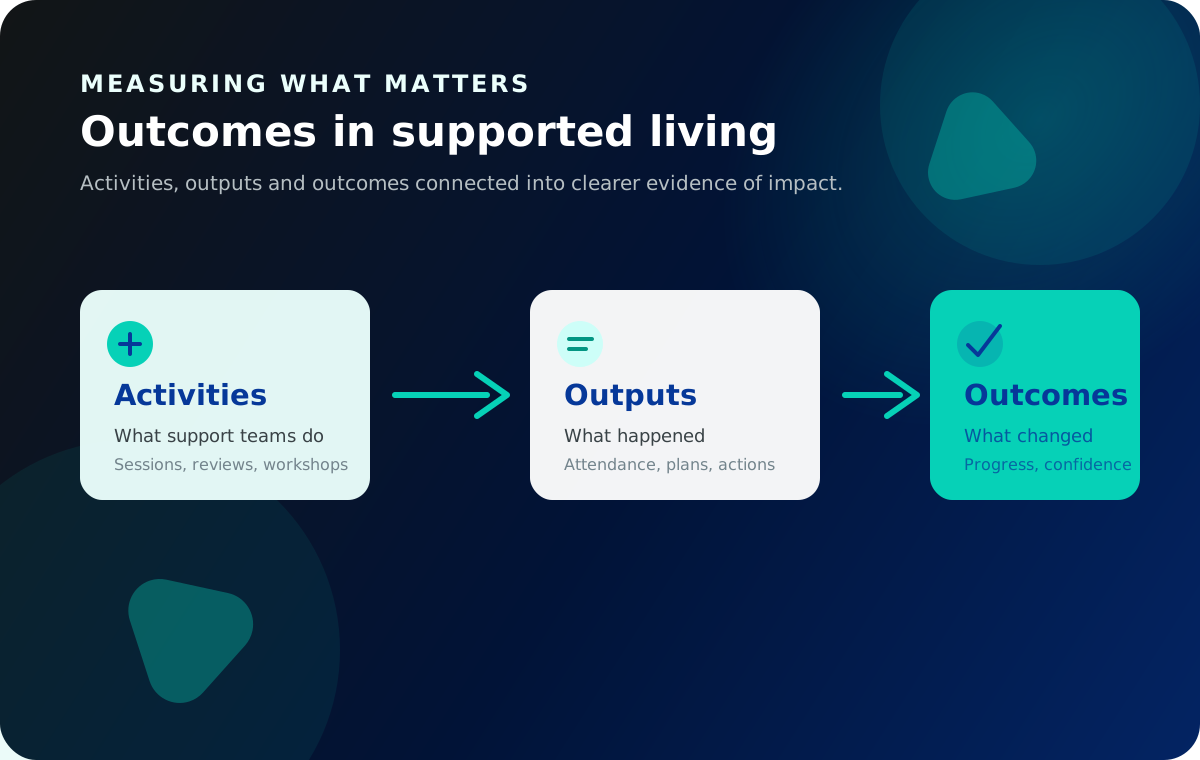
This post is the second in our series, Measuring What Matters: A Practical Guide to Outcomes in Supported Living. If you are new to the topic, start with What Do We Mean by "Outcomes" in Supported Living?, where we explain the difference between activities, outputs and outcomes.
The good news is that effective outcome measurement doesn't have to mean more paperwork.
In fact, the best outcome measurement systems often rely on information that support workers are already recording every day.
The biggest mistake organisations make
A common misconception is that outcomes require entirely new processes.
Organisations often create additional forms, spreadsheets or assessments specifically for outcome tracking.
This usually leads to three problems:
- Staff see outcome recording as separate work.
- Data quality declines over time.
- The process becomes difficult to sustain.
Instead, outcome measurement should be integrated into existing workflows.
The question should not be:
"How do we collect more information?"
The question should be:
"How do we make better use of information we're already collecting?"
Start with clear outcomes
Before measuring outcomes, it's important to define what success looks like.
Most supported living organisations are ultimately helping individuals make progress in areas such as:
- Independent living skills
- Emotional wellbeing
- Housing stability
- Education and employment
- Community participation
- Personal safety
Rather than creating dozens of outcome categories, focus on a small number of meaningful areas that align with your organisation's mission.
A simple framework is usually more effective than a complicated one.
Embed outcomes into support planning
Support plans are one of the most valuable tools for outcome measurement.
A well-written support plan already identifies:
- Current challenges
- Desired goals
- Actions required
- Progress milestones
By linking outcomes directly to support plan objectives, organisations can measure progress naturally as part of existing review processes.
For example, a support plan objective might be:
"Develop the skills required to manage personal finances independently."
Progress towards that objective becomes an outcome indicator without requiring additional paperwork.
Use everyday support notes
Support workers record observations and interactions every day.
These notes often contain rich evidence of progress.
Examples might include:
- Attending appointments independently
- Managing conflict more effectively
- Taking responsibility for household tasks
- Engaging with education or employment opportunities
Individually, these observations may seem small.
Collectively, they tell the story of meaningful change.
The challenge is not collecting the information. The challenge is making it visible.
Focus on trends, not individual entries
Outcomes are rarely demonstrated by a single support note.
Real progress happens over weeks and months.
Rather than focusing on isolated incidents, organisations should look for patterns.
Questions might include:
- Is engagement increasing?
- Is confidence improving?
- Are incidents becoming less frequent?
- Is independence growing over time?
Trend-based thinking provides a much more accurate picture of progress.
Keep reporting simple
One of the biggest barriers to outcome measurement is overcomplicated reporting.
Reports should answer simple questions:
- What changed?
- Why did it change?
- How do we know?
If a report cannot answer those questions clearly, it may be collecting too much information.
The goal is clarity, not complexity.
Make outcomes useful for staff
Outcome measurement should not exist purely for external stakeholders.
When used effectively, it can help staff:
- Recognise progress
- Prioritise support
- Identify emerging risks
- Celebrate achievements
If frontline teams can see value in the information being collected, engagement improves significantly.
Technology can help
As organisations grow, managing outcome information manually becomes increasingly difficult.
The right systems can help bring together:
- Support plans
- Support notes
- Reviews
- Appointments
- Reporting
This allows organisations to spend less time compiling information and more time understanding it.
Technology should reduce administrative burden, not increase it.
Final thoughts
Measuring outcomes doesn't need to mean more forms, more spreadsheets or more bureaucracy.
The most effective organisations build outcome measurement into everyday practice.
By linking outcomes to support plans, making better use of support notes and focusing on meaningful trends, organisations can demonstrate impact without creating additional administrative pressure.
Ultimately, outcome measurement is not about collecting more data.
It's about understanding whether the support being provided is helping people move forward.
And that's something every supported living organisation cares about.