

Lone working is common in supported living. Staff may visit people in their homes, work across dispersed accommodation, attend appointments, respond to incidents or support someone during evenings and weekends. In many services, lone working is unavoidable. The question is not whether it happens, but whether the organisation has enough visibility, planning and follow-up around it.
A safer lone-working approach is not just an app or a panic button. Technology can help, but it works best when it sits inside a wider system of risk assessment, communication, escalation and operational oversight.
Start with the work, not the technology
Before choosing tools, providers should understand where lone working happens and what makes it risky. Lone working risks vary between services. A key worker visiting a young person in semi-independent accommodation may face different risks from a support worker travelling between community appointments or a maintenance worker attending a property issue.
Useful questions include:
- Which roles regularly work alone?
- Which visits or activities carry higher risk?
- Are staff travelling between locations?
- Are there known environmental, behavioural or safeguarding concerns?
- How does the team know someone has arrived safely?
- What happens if a staff member does not check in?
- How are concerns recorded and reviewed?
This creates the foundation for a practical lone-working process. Without that foundation, technology can create a false sense of security.
Assess risk before the visit
Risk assessment should happen before lone work takes place. It does not need to be bureaucratic, but it should be clear enough to guide decisions. Some visits may be low risk. Others may require two staff, a manager check-in, a planned call, or a different time of day.
A good lone-working risk assessment considers:
- The person being supported and any known risks.
- The location and whether staff have been there before.
- The time of day and travel arrangements.
- Recent incidents, safeguarding concerns or changes in behaviour.
- The staff member’s experience and confidence.
- What support or escalation route is available.
Risk assessment should also be dynamic. If circumstances change, staff should feel able to pause, seek advice or rearrange support rather than feeling pressured to continue.
Make check-ins meaningful
Check-ins are a common lone-working control, but they only help if someone is monitoring them and knows what to do when something is missed. A check-in process should be simple for staff and clear for managers.
At minimum, teams should define:
- When staff should check in.
- What information should be included.
- Who monitors missed check-ins.
- How quickly someone should escalate.
- What steps should be taken if a staff member cannot be reached.
A missed check-in should not be treated as an admin inconvenience. It is an operational signal. The response should be proportionate, but it must be timely.
Keep context connected
Lone-working decisions depend on context. Staff need to know whether there have been recent incidents, changes in risk, missed appointments or concerns raised by colleagues. If that information sits in separate systems, staff may not have the full picture before working alone.
Connected records help managers and staff understand:
- Recent incidents or observations.
- Open safeguarding or wellbeing concerns.
- Follow-up tasks from previous visits.
- Appointment history and missed contact.
- Property or environmental issues.
- Support plan updates relevant to the visit.
This is where care management software can support safer practice. The aim is not to overload staff with information, but to make relevant context accessible when it matters.
Create clear escalation routes
Staff need to know what to do if they feel unsafe, cannot complete a visit or are worried about the person they support. Escalation routes should be easy to understand and should not depend on one individual being available.
A clear escalation process includes:
- Who to contact during normal hours.
- Who to contact out of hours.
- When to contact emergency services.
- How to record the concern.
- How follow-up actions are assigned.
- How managers review patterns and learning.
Escalation should be culturally safe too. Staff should not feel they will be criticised for raising concerns or stopping a visit when circumstances feel unsafe.
Record and review incidents
Lone-working incidents and near misses should be recorded consistently. A near miss may reveal an issue before harm occurs. If these records are not captured, organisations lose opportunities to improve.
Examples might include:
- Staff unable to gain access.
- Aggressive behaviour or intimidation.
- Unsafe property conditions.
- Missed check-ins.
- Travel concerns.
- Unexpected visitors or environmental risks.
- Staff feeling unable to complete planned support safely.
The value comes from review. Managers should look for patterns: locations, times, repeated concerns, staffing pressures or gaps in information.
Train staff on judgement, not just procedure
Lone-working training should not only explain the policy. Staff need confidence to make decisions in real situations. Training should include scenarios and practical examples.
Good training covers:
- Recognising risk before and during a visit.
- Using check-in processes correctly.
- Escalating concerns early.
- Recording incidents and near misses.
- Understanding boundaries and personal safety.
- Knowing when not to continue with a visit.
Staff also need to understand that lone-working safety is a shared organisational responsibility. It should not be left to the individual worker to manage alone.
Use technology to support the process
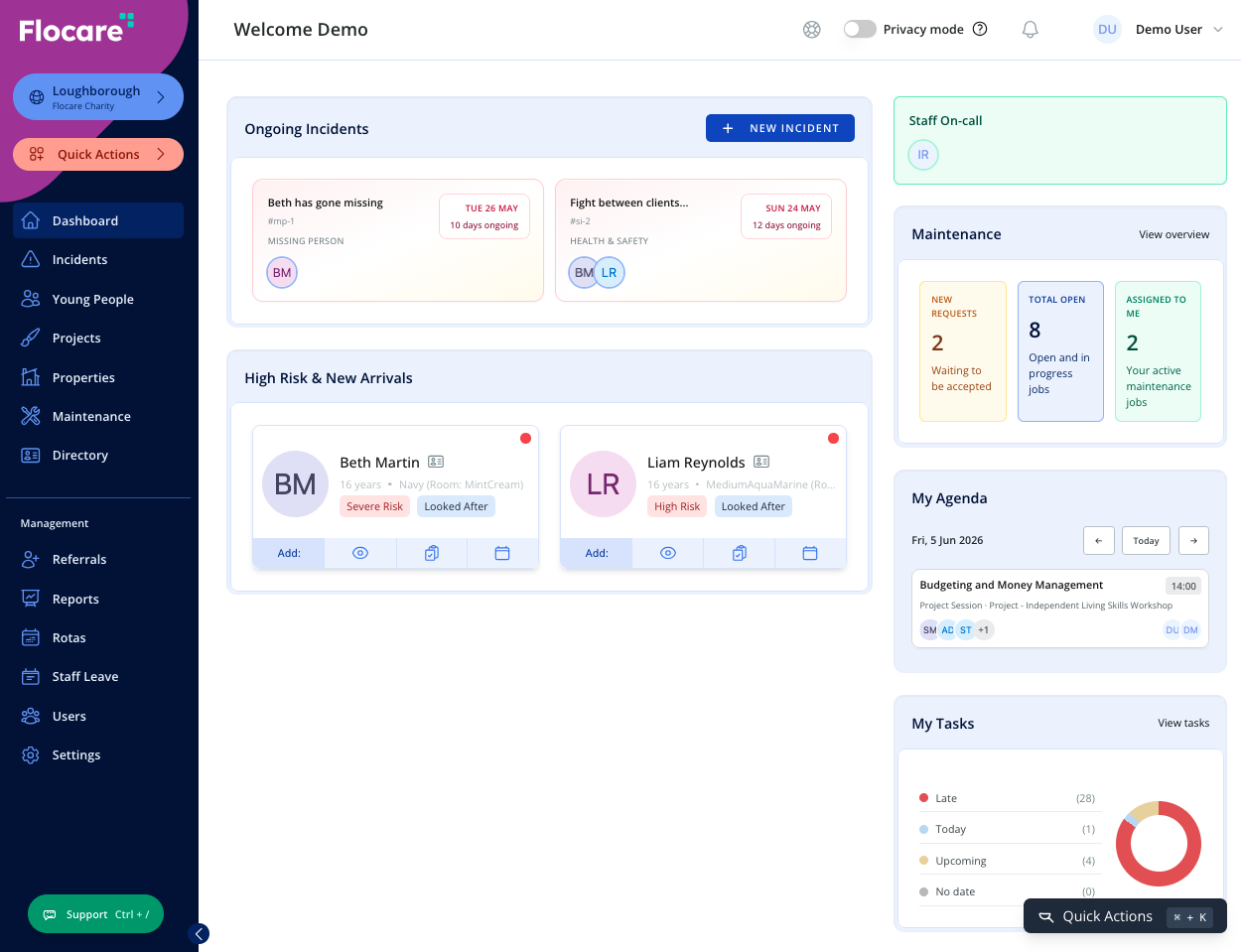
Digital systems can help by improving visibility. They can show appointments, tasks, notes, incidents and follow-up actions in one place. They can help managers see what is outstanding and whether concerns are being addressed.
However, technology should support a well-designed process. It should make it easier to record, review and act. It should not add unnecessary admin or create alerts that nobody monitors.
Key takeaways
Safer lone working depends on risk assessment, context, communication and follow-up. Providers should understand where lone working happens, make check-ins meaningful, keep records connected and give staff clear escalation routes.
The strongest systems are practical. They help staff do the right thing during busy, real-world support work and give managers enough visibility to act before small issues become serious problems.