

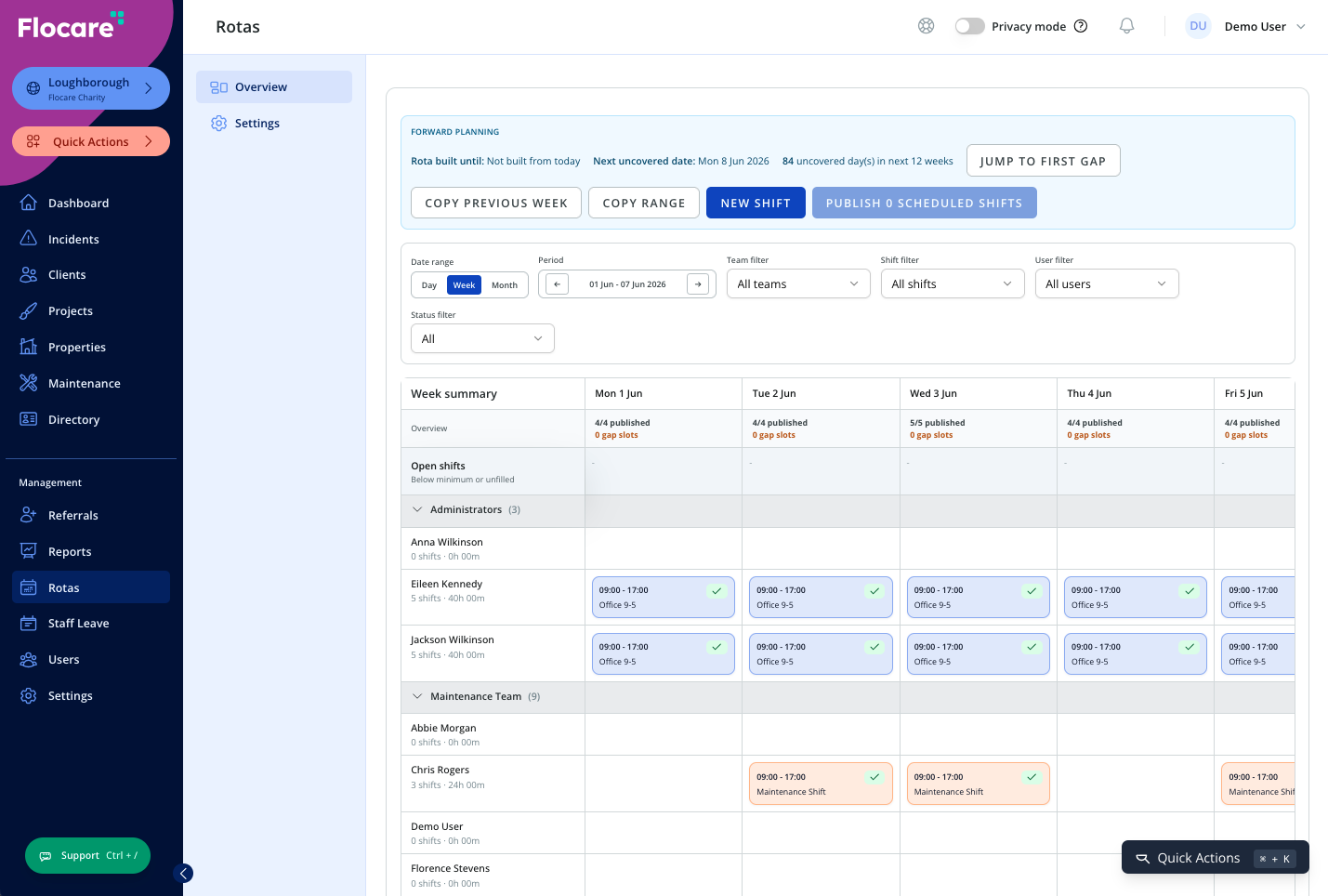
Rotas are one of the most visible operational tools in any care or supported living organisation. When rotas work well, staff know where they need to be, managers can plan cover, and people receiving support experience more consistency. When rotas are unclear, late or disconnected from care information, the impact is felt quickly.
Choosing a rota system is therefore not just an admin decision. It affects staff confidence, continuity of support, management oversight and the ability to respond when plans change.
Start with your operating model
The right rota system depends on how your organisation works. A provider running registered care homes will have different needs from a supported living organisation with dispersed accommodation, key workers, community appointments, sleep-ins, volunteers and floating support.
Before comparing software, map the reality of your workforce:
- Do staff work across multiple locations?
- Do you use volunteers as well as paid staff?
- Are there sleep-ins, waking nights or on-call arrangements?
- Do staff need particular skills, training or permissions for certain shifts?
- How often do rotas change at short notice?
- Do managers need visibility across several services?
- How do staff currently confirm availability or request changes?
This helps avoid choosing a system that looks good in a demo but does not fit daily operations.
Look beyond shift planning
A rota system should help you plan who is working, but care providers often need more than a calendar. The rota needs to connect to the wider operational picture.
For example, managers may need to know whether a staff member has completed required training before assigning them to a shift. A key worker may need to know who is supporting a client before an important appointment. A service manager may need to understand whether a staffing gap affects a support plan, risk assessment or lone-working arrangement.
The best rota system for your organisation may not be the one with the most features. It will be the one that supports safe, practical decisions.
Continuity matters
In supported living, continuity of support is important. People receiving support may rely on trusted relationships, communication styles and routines. A rota system should help managers consider continuity, not just fill empty shifts.
Useful rota features include:
- Visibility of regular staff and key workers.
- Notes about preferences or support needs.
- Warnings when cover creates risk or inconsistency.
- Easy access to previous and upcoming shifts.
- Clear records of changes and who approved them.
Continuity is especially important where people have complex needs, trauma histories, communication differences or high anxiety around change.
Skills and training should be visible
Staff allocation is safer when managers can see whether someone is appropriately trained or experienced. This might include medication awareness, safeguarding training, moving and handling, first aid, lone-working expectations, specialist communication approaches or service-specific induction.
If training records are disconnected from rota planning, managers may need to check another spreadsheet or rely on memory. That increases risk and slows planning down.
When reviewing rota systems, ask:
- Can staff skills or training be visible during rota planning?
- Can managers see expired or missing training?
- Can the system help avoid assigning unsuitable cover?
- Can training gaps be reported across services?
Even if training management is handled in another system, the rota process should not ignore it.
Communication should be clear and auditable
Rotas change. People are off sick, appointments move, emergency cover is needed, or a staff member becomes unavailable. A good rota system should help managers communicate changes clearly and keep a record of what happened.
Important questions include:
- How are staff notified of changes?
- Can staff acknowledge shifts?
- Is there a record of who changed the rota and when?
- Can managers see unfilled shifts quickly?
- How are last-minute changes escalated?
Clarity matters because rota confusion can lead to missed visits, late support, unsafe lone working or unnecessary pressure on other staff.
Volunteers may need different workflows
Some organisations use volunteers alongside paid staff. Volunteer scheduling often has different requirements: availability, preferences, supervision, boundaries, safeguarding checks and training status may all matter.
A rota system should make it clear who is a paid staff member, who is a volunteer, and what each person is authorised or expected to do. Volunteers should not be treated as interchangeable cover if their role is different.
If volunteers are part of your operating model, include them in your rota requirements from the start.
Reporting and oversight
Rota data can help leaders understand workforce pressure. If the system only creates weekly schedules, you may miss useful insight.
Useful reporting might include:
- Unfilled shifts.
- Sickness and absence patterns.
- Use of agency or casual cover.
- Overtime pressure.
- Training-related gaps.
- Service-level staffing trends.
- Changes made after rota publication.
These reports help operations teams see where services are under strain and where workforce planning needs attention.
Integration with care operations
The rota is only one part of care operations. It should work alongside client records, appointments, tasks, incidents and support plans. If rota planning is completely separate, managers may still need multiple systems to understand whether the right support is in place.
For example, if an appointment requires a particular staff member, that should be visible. If an incident creates a temporary staffing requirement, that should be captured. If a support plan changes and affects staffing, the rota process should not be the last place to find out.
Questions to ask vendors
When reviewing rota software, ask practical scenario-based questions:
- How quickly can we fill an unexpected gap?
- Can managers see who is trained for a shift?
- Can staff confirm availability or acknowledge changes?
- How does the system handle volunteers?
- Can we see changes and approvals?
- Can rotas connect to appointments or support requirements?
- What reporting helps us understand workforce pressure?
- How easy is it for frontline staff to use on mobile?
A good demo should show real workflows, not just a clean calendar.
Key takeaways
Choosing the right rota system means understanding how your staff and volunteers actually work. The system should support continuity, skills visibility, communication, reporting and safe operational decisions.
For care and supported living providers, rotas are not separate from support quality. They shape who is present, what context they have, and how confidently the organisation can respond when plans change.